Thursday, December 23, 2010

Recent reading: Quantum

Quantum: Einstein, Bohr, and the Great Debate about the Nature of Reality.
Manjit Kumar.
Go to Amazon

Here is a brilliant portrayal of what may be the most dramatic debate of the 20th century, with repercussions that continue today. With the creation of quantum mechanics in the 1920s, two of the best physicists of the day, Einstein and Bohr, began a lifelong debate about the nature of reality as suggested by the new physics. Kumar captures this conflict in all its human drama with all its sidemen. Although occasionally too technical for most readers, the emphasis here is more on the human conflict than the details of physics, which makes for a captivating, compelling story. I know of no book that covers this ground better. I cannot recommend it highly enough.

Here are some excerpts:
‘No more profound intellectual debate has ever been conducted’, claimed the scientist and novelist C.P. Snow. ‘It is a pity that the debate, because of its nature, can’t be common currency.’

*

For more than half a century it had been universally accepted that light was a wave phenomenon. In ‘On a Heuristic Point of View Concerning the Production and Transformation of Light’, Einstein put forward the idea that light was not made up of waves, but particle-like quanta.

*

In 1924, Einstein was still struggling to accept what he had unearthed: ‘I find the idea quite intolerable that an electron exposed to radiation should choose of its own free will, not only its moment to jump off, but also its direction. In that case, I would rather be a cobbler, or even an employee in a gaming-house, than a physicist.’

*

In the two years after their meetings in Berlin and Copenhagen, Einstein and Bohr continued their individual struggles with the quantum. Both were beginning to feel the strain. ‘I suppose it’s a good thing that I have so much to distract me,’ Einstein wrote to Ehrenfest in March 1922, ‘else the quantum problem would have got me into a lunatic asylum.’

*

They had to stop making compromises and cease trying to accommodate quantum concepts within the comfortable and familiar framework of classical physics. Physicists had to break free. The first to do so was Heisenberg when he pragmatically adopted the positivist credo that science should be based on observable facts, and attempted to construct a theory based solely on the observable quantities.

*

During one discussion Schrödinger called ‘the whole idea of quantum jumps a sheer fantasy’. ‘But it does not prove that there are no quantum jumps’, Bohr countered. All it proved, he continued, was that ‘we cannot imagine them’. Emotions soon ran high.

*

In December 1926, Einstein had expressed his growing disquiet at the rejection of causality and determinism in a letter to Born: ‘quantum mechanics is certainly imposing. But an inner voice tells me that it is not yet the real thing. The theory says a lot, but does not really bring us any closer to the secret of the “old one”. I, at any rate, am convinced that He is not playing at dice.’

*

Heisenberg had discovered that quantum mechanics forbids, at any given moment, the precise determination of both the position and the momentum of a particle. It is possible to measure exactly either where an electron is or how fast it is moving, but not both simultaneously. It was nature’s price for knowing one of the two exactly.

*

At first even the young quantum magician was uneasy with the Dane’s answers. ‘I remember discussions with Bohr which went through many hours till very late at night and ended almost in despair,’ Heisenberg wrote later, ‘and when at the end of the discussion I went alone for a walk in the neighbouring park I repeated to myself again and again the question: Can nature possibly be as absurd as it seemed to us in these atomic experiments?’86 Bohr’s answer was an unequivocal yes.

*

After several days, Heisenberg later recalled, ‘Bohr, Pauli and I – knew that we could now be sure of our ground, and Einstein understood that the new interpretation of quantum mechanics cannot be refuted so simply’.56 But Einstein refused to yield.

*

Just then, with a hint of smile, Einstein uttered the deadly words: weigh the box again. In a flash, Bohr realised that he and the Copenhagen interpretation were in deep trouble.

*

In his desperation to destroy the Copenhagen view of quantum reality, Einstein had forgotten to take into account his own theory of general relativity. He had ignored the effects of gravity on the measurement of time by the clock inside the light box.

*

It had taken the Nazis a matter of weeks to transform Göttingen, the cradle of quantum mechanics, from a great university to a second-rate institution. The Nazi minister of education asked David Hilbert, the most fêted mathematician in Göttingen, whether it was true ‘that your Institute suffered so much from the departure of the Jews and their friends?’ ‘Suffered? No, it didn’t suffer, Herr Minister’, replied Hilbert. ‘It just doesn’t exist any more.’

*

In the years following Solvay 1930, there was little direct contact between Bohr and Einstein. A valuable channel of communication ceased with Paul Ehrenfest’s suicide in September 1933. In a moving tribute, Einstein wrote of his friend’s inner struggle to understand quantum mechanics and ‘the increasing difficulty of adaptation to new thoughts which always confronts the man past fifty. I do not know how many readers of these lines will be capable of fully grasping that tragedy.’

*

Bohr believed that quantum mechanics was a complete fundamental theory of nature, and he built his philosophical worldview on top of it. It led him to declare: ‘There is no quantum world. There is only an abstract quantum mechanical description. It is wrong to think that the task of physics is to find out how nature is. Physics concerns what we can say about nature.’64 Einstein, on the other hand, chose the alternative approach.

*

Yet, in the end, he failed to refute Bohr’s Copenhagen interpretation. ‘About relativity he spoke with detachment, about quantum theory with passion’, recalled Abraham Pais, who had known Einstein in Princeton.4 ‘The quantum was his demon.’

*

A poll conducted in July 1999 during a conference on quantum physics held at Cambridge University revealed the answers of a new generation to the vexed question of interpretation.34 Of the 90 physicists polled, only four voted for the Copenhagen interpretation, but 30 favoured the modern version of Everett’s many worlds.

Quotation of the day

I don't know if God exists, but it would be better for His reputation if He didn't.
– Jules Renard (1864-1910)

Wednesday, December 22, 2010

Obama's Got (Found) Game

Obama's Got (Found) Game:

"But through dogged patience, and adaptable style and a refusal to panic, the president has piled up the longest list of new laws, treaties and administrative actions anyone has seen here in decades."

Advertisements for myself: Kerouac's Scroll

Kerouac's Scroll
Charles Deemer
Go to Amazon

Here's the pitch:
TWO OLD MEN ON THE ROAD
  
  Best friends for over half-a-century, Hooker and Bear
  decide to drive 3000 miles across the country, west
  coast to east, in order to see “the Kerouac Scroll” (the
  original manuscript of On the Road) on display at the
  Smithsonian in Washington D.C.
  
  Each brings a deep secret to the journey: Hooker
  has terminal cancer; and Bear has been accused of
  child abuse by his estranged daughter, 30 years after
  the alleged incident occurred.
  
  With the humor of "Grumpy Old Men" and the heart
  of "Tuesdays With Morrie", KEROUAC'S SCROLL tells the
  story of two old men in the twilight of their lives as
  they shape an extraordinary adventure on the road to
  bring meaning and integrity to the end of their life journeys.
  
  KEROUAC'S SCROLL is a literary, darkly comic novel of 58,000 words.
This novel has found a few fans, especially among writer-colleagues. Here are two:
 Your novel "Kerouac's Scroll" knocked me out. Ripping yarn, as the Brits would say, but more significant, a story that is as honest as the day is long. You understand life (and the story form to express it). [I do have, however, a quibble with the ending. Happy to discuss.] Your writing is elegant in its direct simplicity, not a false or unnecessary word, and I can't say how much I admire that.
 Have just finished Kerouac's Scroll..what an achievement!  Reading it reminded me instantly of the many conversations we had 15 years ago in and around Nobbyland.  It was a fine pleasure, indeed, to hear your voice throughout.  And pleased especially to find Orofino (my father's birthplace) has at last secured its deserved place in literature. Please accept my heartiest congratulations for having crafted a story so generous to the enduring human spirit.  It works on so many levels that sitting in my chair, the closed book happy in my lap, I feel like one of Angel's aliens might feel after having just played and won a particularly satisfying three-dimensional chess match.

(Actually those conversations were closer to 25 years ago!)

I never expected the novel to sell much, which is why I have no second thoughts about offering free electronic versions.

Here's a sample.
That morning began my indoctrination into the Church of God’s Country, the  Pacific Northwest, especially the logging country along the Clearwater River in northern Idaho where Hooker was raised. To the ears of an LA boy, his tales of all night poker games and one week runs from small town bar to small town bar along dirt roads through the hills above the Clearwater, of loose women and rough loggers, had the ring of a Hollywood western – and I listened spellbound, as fascinated as I’d been as a kid at a Saturday Hopalong Cassidy marathon. When I got discharged, and Hooker right behind me, I made my first trip to the Northwest and Hooker’s home town of Orofino expecting a jolt of reality, the reality that belied two years’ of listening to wild stories about this so-called God’s Country, Hooker’s birthplace.
On the surface, at least, Hooker’s country lived up to its praise. On each side of the narrow road that twisted and turned alongside the river from Lewiston to Orofino, hills rose to form dense forests stretching up and beyond the visible summit. I’d never seen so many trees in my life. Welcome to God’s country.
Hooker was staying with his mother while looking for a house in nearby Moscow, where the University of Idaho was, so he could bring up his wife and young sons, who were waiting in California where Hooker had been discharged. I was looking forward to partying with Hooker to forget my marital troubles at home, though separation from Helen was still several months away. I’d made the trip to Idaho alone. I was worried, however, that his mother might dampen our style. But I couldn’t turn down a visit when I was only a long day’s drive away, having moved to Oregon to start graduate school.
I found the address Hooker had provided on a wooded street in the hills above the river. I parked behind two cars in the driveway and went to the door. When it opened, a woman barely five foot tall was staring up at me, grinning. She had red hair and a mischievous glint in her eye. Hooker’s mother.
The first thing out of her mouth was, “So you’re the fucking bear.”
Her name was Flo. A feisty woman who used the vernacular of a hard-drinking logger, she didn’t dampen our party style. She inspired it. She kept up with us drink for drink and kept me in stitches with stories about cooking in a logging camp as a young woman and later dealing cards in one of Orofino’s whore houses. Flo rattled off ribald one-liners all night long. Some of them I remember to this day. “She was so fat if she had a broom stick up her ass, she could sweep both sides of the street."

Sarah Palin: Winner Of The 2010 Glenn Beck Misinformer Of The Year Award | Media Matters for America

Sarah Palin: Winner Of The 2010 Glenn Beck Misinformer Of The Year Award | Media Matters for America

Daily Kos: Is Obama smarter than us?

Daily Kos: Is Obama smarter than us?

He's sure looking better than he did a month ago.

Andre Dubus on Kindle

Amazon announced today that the work of the late Andre Dubus, surely one of our best American short story writers, is now available on Kindle. I was an early champion of his in the national press, giving Adultery and other choices (what a title!) a rave review in The New Leader.

I am still waiting for Evan Connell and Graham Greene to come to Kindle.

Recent viewing: Cradle Will Rock

Now and again an actor or director with clout does a pet project, the kind of project LaLaLand would never embrace without such star backing. For Tim Robbins it was to bring to the screen the story behind an unusual and controversial "labor musical" created in the WPA's Federal Theatre Project. The Brechtian play is The Cradle Will Rock by Marc Blitzstein. The film is Cradle Will Rock, a story that puts the play's troubled creation in social and political context, a story filled with the human dramas of those involved, rich and poor alike. The end result is just short of a masterpiece. Only some miscasting (John Cusack as Rockefeller) compromises the production. But nothing compromises the great spirit of this film. It's inspiring -- and sad -- at the same time. (Sad because, well, here we go again.)

DVD at Amazon

About the original musical:

Cradle Will Rock Website

Libretto

On a lesser scale, this reminds of me of the controversy here in the late 1970s around my labor play 1934: Blood and Roses, which also became controversial, even at a national level after NPR did a story on the local controversy. The State Fair didn't initially approve of a performance on Labor Day, of all times, because their judging committee found the play to be "pro-union". Duh. However, they eventually caved and the play got done. I should say that I was commissioned to write the script, which was my contribution. After that the Portland Labor Players II, directed by Melinda Pittman, took the project, toured it, and made it what it became.

Quotation of the day

God is a comic playing to an audience that's afraid to laugh. 
– Voltaire (1694-1778)

Martin Scorsese Speaks Out In Support Of Imprisoned Iranian Filmmakers – Deadline.com

Martin Scorsese Speaks Out In Support Of Imprisoned Iranian Filmmakers – Deadline.com

Recent reading: Seabiscuit

Seabiscuit: An American Legend
Laura Hillenbrand
Go to Amazon

There is so much drama in this story that it would be hard to screw it up. Hillenbrand sometimes overwrites to my tastes but she tells an inherently dramatic story in a compelling way, only occasionally letting her writing get ridiculous, as when she describes a trainer disappearing into a photo so that only his glasses are visible, an image contradicted by an accompany photograph that shows no such thing. I prefer the movie based on this book, where the action drives the story.
The world broke over Santa Anita. Howard ran from his box with his fist in the air. Smith went with him. Yummy banged around the winner’s circle, jumping up and down. Agnes stood in the throng, sobbing. All around them, men and women hurled their hats in the air, poured onto the track, drummed on the rails, and slapped one another on the back. Hundreds of spectators were weeping with joy.25 “Listen to this crowd roar!” shouted Hernandez.26 “Seventy-eight thousand fans going absolutely crazy, including this announcer!” Virtually every journalist reported that he had never heard shouting so loud and sustained.

Tuesday, December 21, 2010

Wayland Baptist dominated women's basketball in the 50s | Lubbock Online | Lubbock Avalanche-Journal

Wayland Baptist dominated women's basketball in the 50s | Lubbock Online | Lubbock Avalanche-Journal:

"In light of Connecticut breaking UCLA's 88-game winning streak with a 93-62 victory against No. 22 Florida State on Tuesday, the New York Times ran a feature story headlined 'Before UConn, before UCLA, there was Wayland Baptist.'

The story reflects on the Flying Queens' 131-game winning streak from 1953-58."

Very few announcers got it right and talked about the DIVISION I record that was broken. Not the "basketball" record.

OSCAR: Critics Keep Friending ‘The Social Network’ While Picture Rivals Keep Fretting – Deadline.com

OSCAR: Critics Keep Friending ‘The Social Network’ While Picture Rivals Keep Fretting – Deadline.com

No. 89: UConn tops UCLA, beats Florida St 93-62 - Yahoo! News

No. 89: UConn tops UCLA, beats Florida St 93-62 - Yahoo! News

8-Year-Olds Publish Scientific Bee Study | Wired Science | Wired.com

8-Year-Olds Publish Scientific Bee Study | Wired Science | Wired.com

Love it.

Recent reading: Bloody Treason

Bloody Treason: The Assassination of John F. Kennedy.
Noel H. Twyman.
Go to Amazon.

For the casual reader, this book probably is overkill. Twyman presents interviews, documents, resources in a torrent of what he calls evidence, though much of it would not stand up in a court of law. All the same, there is enough here to make the case.

I am especially convinced by a number of facts of the case. Here are some of them.
I also asked him if he saw the explosion of blood and brains out of the head.  He replied that he did.  I asked him if he noticed which direction the eruption went.  He pointed back over his left shoulder.  He said, “It went this way.”  I said, you mean it went to the left and rear?  He said yes.  Bartholomew then asked him, “Are you sure that you didn’t see the blood and brains going up and to the front?”  Schwartz said, “No; it was to the left and rear.”  We went over this several times with him to be certain that he was clear on this point.  He was very clear.
In other words, JFK was shot from the front. Doctors who were the first to see him afterwards confirm this.
 All of the doctors at Parkland Hospital stated that there was an exit wound in the back of Kennedy’s head (indicating a shot from the front).
Perhaps even more disturbing than the act itself is the subsequent cover-up.
 The point here is that the photographs of the brain in the National Archives show no damage to the cerebellum. The above testimonies, sworn under oath by experienced medical doctors who observed the head wound, clearly and unambiguously describe extruded and damaged cerebellar tissue. If their testimonies are correct, and there is no reason to believe they are not, then the photographs of the brain in the National Archives are not of Kennedy’s brain. They must therefore be the brain of someone other than Kennedy.
*
 The most compelling evidence of all are the nine people who predicted the assassination, in particular how Eugene B. Dinkin and Joseph Milteer described in advance the basic concept and composition of the plot. By examining the backgrounds of these nine people and John Martino, we see a skeletal outline of the complete plot.
 *
From the day that John Kennedy was murdered, it has been widely accepted that the performance of the Secret Service was unbelievably lax, before and after the shooting. The most basic rules of presidential protection were violated. No effort was made to guard against rifle fire from tall buildings. No effort was made to see that windows were closed in tall buildings along the parade route, even at Dealey Plaza where the president would be most vulnerable. Moreover, no effort was made to secure the area behind the picket fence and wall on the grassy knoll. No effort was made to check that area or station a Secret Service agent or a Dallas policeman there.
I could go on and on. By now there is a large collection of books on the conspiracy side of the event's explanation, and a number who embrace the lone assassin (Oswald) thesis. The House Committee investigating the assassination some time back concluded there was a 75% chance of conspiracy. Personally, I put it at 100%. I am convinced.

But the question, even the more interesting question, is so what? Even though most Americans support the conspiracy thesis, this opinion hasn't resulted in better government, or happier lives, or much of anything but a growing cynicism about government, much of it justifiable.

Politics, wrote Norman Brown, is pissing in public but the image is too polite.

Oregon football: Chip Kelly is named Associated Press coach of the year | OregonLive.com

Oregon football: Chip Kelly is named Associated Press coach of the year | OregonLive.com

Sundance-Bound Iranian Filmmakers Feel Chill Of Jafar Panahi Imprisonment – Deadline.com

Sundance-Bound Iranian Filmmakers Feel Chill Of Jafar Panahi Imprisonment – Deadline.com:

"EXCLUSIVE: The Christmas holiday has so far made it difficult to rally a collective outcry from directors Steven Spielberg, Martin Scorsese and Francis Coppola, who spoke out for Iranian filmmaker Jafar Panahi when he was first arrested. But two Iranian filmmakers who are debuting politically-charged films at next month's Sundance Film Festival say that a groundswell of publicity and support from the international film community could play an important role for Panahi as he appeals yesterday's harsh 6-year prison sentence and 20-year ban from film making. Panahi and Muhammad Rasoulof both drew 6-year sentences from an oppressive regime that has cast a chill on Iranian filmmakers who want to tell honest stories."

Acidifying Oceans Could Upset Life’s Nitrogen Cycles | Wired Science | Wired.com

Acidifying Oceans Could Upset Life’s Nitrogen Cycles | Wired Science | Wired.com

Monday, December 20, 2010

Why celebrity memoirs rule publishing | Books | The Guardian

Why celebrity memoirs rule publishing | Books | The Guardian

London Critics Circle Announces Nominees – Deadline.com

London Critics Circle Announces Nominees – Deadline.com

Girl Chimpanzees May Use Sticks as Dolls | Wired Science | Wired.com

Girl Chimpanzees May Use Sticks as Dolls | Wired Science | Wired.com

FCC Net Neutrality Rules Slammed from All Sides | Epicenter | Wired.com

FCC Net Neutrality Rules Slammed from All Sides | Epicenter | Wired.com:

"Many Republicans, including FCC commissioner Robert McDowell, blasted the new rules as an interventionist over-reach by an activist federal regulator intent on asserting control over the internet. Meanwhile, Democrats, including Sen. Al Franken from Minnesota, along with public interest and free speech groups, slammed the rules as woefully inadquate to protect the public from the predations of an industry keen on turning the internet into a cyber-version of cable TV, with tiers and premium packages affordable by the wealthy."

Echinacea For The Common Cold: Largest Study Yet Finds The Herbal Remedy Doesn't Help

Echinacea For The Common Cold: Largest Study Yet Finds The Herbal Remedy Doesn't Help

Ah, now maybe I can get H to stop giving it to me ha ha.

Wet mellow

A leisurely wet day of reading. A bit of brooding, not obsessively, about possible future projects. In truth, I rather feel like I'm on vacation for the first time in years. Decades. Just absorbed in reading.

My new book arrived

Well, not "my book" but an anthology in which I have a contribution. The book is Now Write! Screenwriting.

Contributors

Dec. 20, 1996: Science Loses Its Most Visible Public Champion | This Day In Tech | Wired.com

Dec. 20, 1996: Science Loses Its Most Visible Public Champion | This Day In Tech | Wired.com:

"Calling Carl Sagan a scientist is a little like calling the Beatles a rock band. Sagan was certainly a scientist (an astronomer, biologist and astrophysicist, to be precise). But he was also science’s most visible public advocate, a secular humanist, a fervent believer in extraterrestrial life, a teacher, an author, a television host and a political activist."

Sunday, December 19, 2010

Phyl Kerns, where are you?

You left me a message with no contact info. Usually I can track folks down on the net but I'm having no luck. Where is Phyl Kerns?

Solstice-eclipse overlap first in 456 years

Solstice-eclipse overlap first in 456 years:

"OTTAWA — This year's winter solstice — an event that will occur next Tuesday — will coincide with a full lunar eclipse in a union that hasn't been seen in 456 years."

Amelia Earhart's Bones May Have Been found On Island

Amelia Earhart's Bones May Have Been found On Island:

"NORMAN, Okla. — The three bone fragments turned up on a deserted South Pacific island that lay along the course Amelia Earhart was following when she vanished. Nearby were several tantalizing artifacts: some old makeup, some glass bottles and shells that had been cut open.

Now scientists at the University of Oklahoma hope to extract DNA from the tiny bone chips in tests that could prove Earhart died as a castaway after failing in her 1937 quest to become the first woman to fly around the world."

Timothy Karr: The Little Bill That Could

Timothy Karr: The Little Bill That Could:

"Little noticed but extremely important to progressives, on Saturday afternoon Congress also passed the Local Community Radio Act.

This legislation opens up radio spectrum to hundreds, if not thousands, of local independent radio stations (also known as LPFM).

Its passing will bring new choices and voices on the radio dial nationwide, but is especially relevant to a broadcast area reaching 160 million people who lived in areas where these stations had previously been barred from local airwaves."

UConn women win 88th straight, matching UCLA men - Yahoo! News

UConn women win 88th straight, matching UCLA men - Yahoo! News

Best Oldies show in the universe

And 40 years old at that, hosted by Jivin' Johnny Eteredge, my friend for 40 years, and available on the net at KRVM in Eugene, every Sunday morning at 11 a.m.  Go to page to listen live.

John also hosts a country classics show on Sat morn and a 60s rock show on Monday eves. See program guide.

Disappointment

I'm re-reading Grapes of Wrath and, while enjoying it, am also disappointed. What disappoints me is its poor storytelling efficiency, especially in the non-Joad chapters, which I find too often repetitive and over-written. I think you could take 20 or more pages out of this and lose nothing, in fact improve it. This is in great contrast to Steinbeck's Of Mice and Men with its storytelling efficiency. So this one is not the masterpiece that I remember, though I still embrace it as "a good book." But it could have been better.

Saturday, December 18, 2010

Why we love bad writing - Stieg Larsson - Salon.com

Why we love bad writing - Stieg Larsson - Salon.com:

"Stieg Larsson and Dan Brown novels are riddled with cliches, but for many readers, that's a feature not a bug"

Bite-sized crab cakes - Recipes, Food & Drink - The Independent

Bite-sized crab cakes - Recipes, Food & Drink - The Independent

Daily Kos: This Week My Town Stood Up To Teabaggers

Daily Kos: This Week My Town Stood Up To Teabaggers:

"Here's the crazy on full display The ring leader swears we're all going to be mandated to ride bicycles. The guy that follows says there weren't any bikes outfront (keep in mind, it's December and cold here, but he was still wrong) and seems to think that he's the only one who pays taxes. Then there was the one that took the cake...the lady that warned 'the young mothers' that the day when children would be forced to ride bikes in the cold was coming and that we were all going to be put in compounds. You can't make this shit up."


The Arc Of History - The Daily Dish | By Andrew Sullivan

The Arc Of History - The Daily Dish | By Andrew Sullivan:

"My mind and heart are full of cascading thoughts and feelings today. For the most part, I think of the past, and the countless gay men and lesbians who have served their country with honor over the decades and centuries. Today is their day as much as it is that of the current gay servicemembers. They form a brigade through time that has finally marched into the open clearing of equal dignity."

House Republicans Block Child Marriage Prevention Act

House Republicans Block Child Marriage Prevention Act:

"The legislation seemed likely to garner strong bipartisan support in Congress, and in the Senate, it did. But last night, the bill was voted down in the House by Republicans who argued the bill is too costly and could lead to increased abortions -- gripes the measure's supporters say have no basis in reality and are just excuses to kill the popular bill."

Republicans, Theodore Roosevelt and the estate tax compromise: The rich get richer - latimes.com

Republicans, Theodore Roosevelt and the estate tax compromise: The rich get richer - latimes.com: "

Today's Republicans might want to remember that the estate tax's modern champion was a president they used to regard as among the greatest the party has produced — Theodore Roosevelt."

The Geek’s Guide to Winter Reading | Inspired By You

The Geek’s Guide to Winter Reading | Inspired By You

Cultural Evolution Could Be Studied in Google Books Database | Wired Science | Wired.com

Cultural Evolution Could Be Studied in Google Books Database | Wired Science | Wired.com

Return of the netbook

Everything seems to be in order.

Special morning

We're going out to breakfast TOGETHER later, which doesn't happen very often. Usually I eat breakfast between 5 and 7 and H later around 10. But we'll do it and then drive out to pick up my netbook. Then I have a bowl game to watch, and practice banjo as I watch. Should be a good day.

Friday, December 17, 2010

Local News | Eastern Washington defeats Villanova 41-31 | Seattle Times Newspaper

Local News | Eastern Washington defeats Villanova 41-31 | Seattle Times Newspaper:

"CHENEY, Wash. —
There must have been some magic in that new red turf Eastern Washington bought.

Bo Levi Mitchell threw four touchdown passes as Eastern Washington beat Villanova 41-31 on Friday night in the semifinals of the FCS football playoffs."

Operation Netbook

Ready and successful, a new screen -- I'm without wheels at the moment, so I'll pick it up tomorrow morning. Hooray!

New at Oregon Literary Review

A conversation with Primus St. John.

Portland 1978

Terry Simons has edited a collection of work from Portland writers in 1978. This is a valuable addition to our literary history. Check it out.

A personal note. This is when I arrived in Portland, entering a well-established literary scene of which Simons was a major participant, editing a poetry review at the time. Then Terry disappeared to a degree, his work less visible. What is extraordinary and wonderful about the digital revolution, is that artists like Terry can take it by the throat and become their own publishers, divorcing the whims of the pop culture marketplace forever, and for the first time give wide availability to work that otherwise would be lost or very hard to access. I've seen the same thing happen with my writer friend Lynn Jeffress in Paris, a bright and talented woman also without means to find her audience until the digital revolution made it possible. Sure, there is a large amount of amateurish work made public now but this is a small price to pay for the significant first rate work that has become available for the first time from the likes of Simons, Jeffress, and others (I suppose I should even add myself, though I played the traditional game for a long time before I took matters into my own hands). A book like this anthology is what the digital revolution does best.

Rendering, rendering

A very dear friend of H's has late stage cancer, and H is spending a lot of time trying to help her get situated as she prefers. That's what friends are for. But it takes a toll on one as well, certainly on H.

Trying to get this video rendered and online. Lots of waiting. Of course, I should bring the Kindle down here and just read as I wait but for the moment I'm keeping busy on various net chores.

The bowl games begin this weekend. I may watch 6 or 8 of them, the ones with the west coast teams. I'm a diehard west coast boy for sure. Despite my Virginia, New Jersey, Texas Navy-brat roots. It's Southern California that stuck, and then the Northwest.

Video

I finished editing the video profile of Primus St. John ... it's, what else?, rendering at the moment. Be a few hours before I get it online.

With luck I'll pick up my netbook today.

With all the reading I'm doing now, more space here will be devoted to books, I'm sure. Comments on things I've read.

I have small ideas for projects but nothing is moving me to go work. At the moment I get more enjoyment from reading.

Recent reading: The Religion Virus

The Religion Virus: Why we believe in God: An evolutionist explains religion's incredible hold on humanity. Craig A. James. Go to Amazon.

I believe this is an extraordinary book but one that will change few minds about God and religion. I'm "prepared" to embrace the thesis here because, after all, I'm the kid who was persuaded in high school by an essay by Bertrand Russell called "Why I Am Not A Christian," and I've had trouble with organized religion ever since. This book does its best to answer the question "why do humans believe in God?" and it offers a compelling thesis that, at the very least, is challenging "food for thought."

Excerpts:

The loving, omnipotent, fatherly God we learn about today is the result of the longest and best "marketing makeover" in history – four thousand years of changes and improvements to Yahweh's image, from Abraham's time to today. Yahweh has evolved into the Almighty God, the God of everything, the loving, forgiving God, the only God. The Yahweh makeover is so complete that we just call him "God" now, with a capital "G". We don't have to distinguish God from the other gods, because most Westerners are monotheists.


 Religion is a belief system, not a germ!" But in fact, when I use the phrase religion virus, I mean it in a very literal sense. The religion virus isn't a physical entity, with DNA and proteins and such, but in every other sense, it is a true virus. The parallels between the viruses that infect your body and the viruses that infect your mind are truly astonishing. By the end of this book, I hope to give you a detailed understanding of the infective, reproductive, parasitic nature of the religion virus and its effect on culture, society, politics, and the future of humanity.


 The fittest religious ideas survive, and the unfit ones become extinct. And by "fittest" we do not mean the ideas that are true. Rather, these are the ideas that make people want to believe them, whether true or false, beneficial or harmful. An idea can be a survivor because it appeals to our hopes, our vanity, or the promise that Heaven awaits. But an idea can also be a survivor because it preys on our fears and prejudices.


 The word "fittest" conjures up ideas of wholesomeness, athletic prowess, morality and other human values. Nothing could be further from the truth: Evolution doesn't care about human concepts like "right" and "wrong" or "good" and "bad." It's unfortunate that the word "fittest," which brings so many human moral and ethical connotations, is a keyword of Evolution Science. It's not "fitness" that matters, it's "reproduction." To put this in human terms, Mormons and Catholics are more "fit" than atheists and others, because they typically have more children.


 The early history of America is largely a result of the Intolerance meme. The Puritans were a persecuted Christian minority in England, at odds with the "official" Christian Church of England doctrine, so they fled to America to establish their own Puritan town. Ironically, the Puritans, and other groups that followed, in spite of being victims of persecution, were no more tolerant than their former persecutors – once they arrived on the shores of America, they were quick to impose their own version of Christianity on everyone in sight.


 But when the child grows into an adult, beliefs become entrenched. The wide open library of a child's mind, which yearns to absorb new volumes, seems to turn into a dusty, locked archive. Some new information can go in, especially if it agrees with the information that's already there, but most of a person's fundamental beliefs become almost unassailable by age eighteen. It is very difficult to alter an adult's opinions.


 And the truth of these beliefs is irrelevant. "When you die, you're dead and gone," isn't nearly as attractive as, "When you die, you'll live on forever in eternal joy," regardless of which one is true. The Religion Virus today is made of the memes that we really, really want to believe.


The same principles that Darwin discovered for biological life can be applied to ideas and culture, and to religion in particular. The religions we know today are the result of a hundred thousand years of differential reproduction, mutation, and competition between millions of memes, most of which are extinct today.
Of course, conservative Christians don't embrace Darwin at all so obviously will not approve of expanding his principles to the evolution of culture and religion. This book is singing to the choir, and a small choir it is, but for those of us who hear the tune, it is a sweet, sad one.

Afterthought. Idea for a Utopian novel. Progressives organize and work to become more "fit" by having more children. That is, they form communes all around the world and screw their brains out. Has someone already written this? Walden III: Lust and Survival. (We had Thoreau, Walden II was B. F. Skinner as I remember.)


A resource for those interested in religious questions is Iron Chariots:
Iron Chariots is intended to provide information on apologetics and counter-apologetics. We'll be collecting common arguments and providing responses, information and resources to help counter the glut of misinformation and poor arguments which masquerade as "evidence" for religious claims.
The complexity of issues surrounding religion ensures that any proper assessment requires us to delve into a number of philosophical, historical and sociological topics. Our ultimate goal is to provide a robust and definitive resource for:
  • atheists seeking responses to common apologetic arguments
  • theists who are questioning the efficacy of their beliefs
  • apologists who feel that their "pet" argument is above reproach
  • individuals of any philosophical ideal who have an interest in religious studies

Thursday, December 16, 2010

Thirst

I've been such a prolific, obsessive writer for so long (nearly half a century) that I've never had time to do the reading I've wanted to do. My reading was always practical: research or student work, largely. Now I am reading whatever the hell I feel like reading, and on the Kindle, and I am having a grand old time. There is so much great work out there, it's staggering. Humbling if one can contribute just a drop to the literary universe.

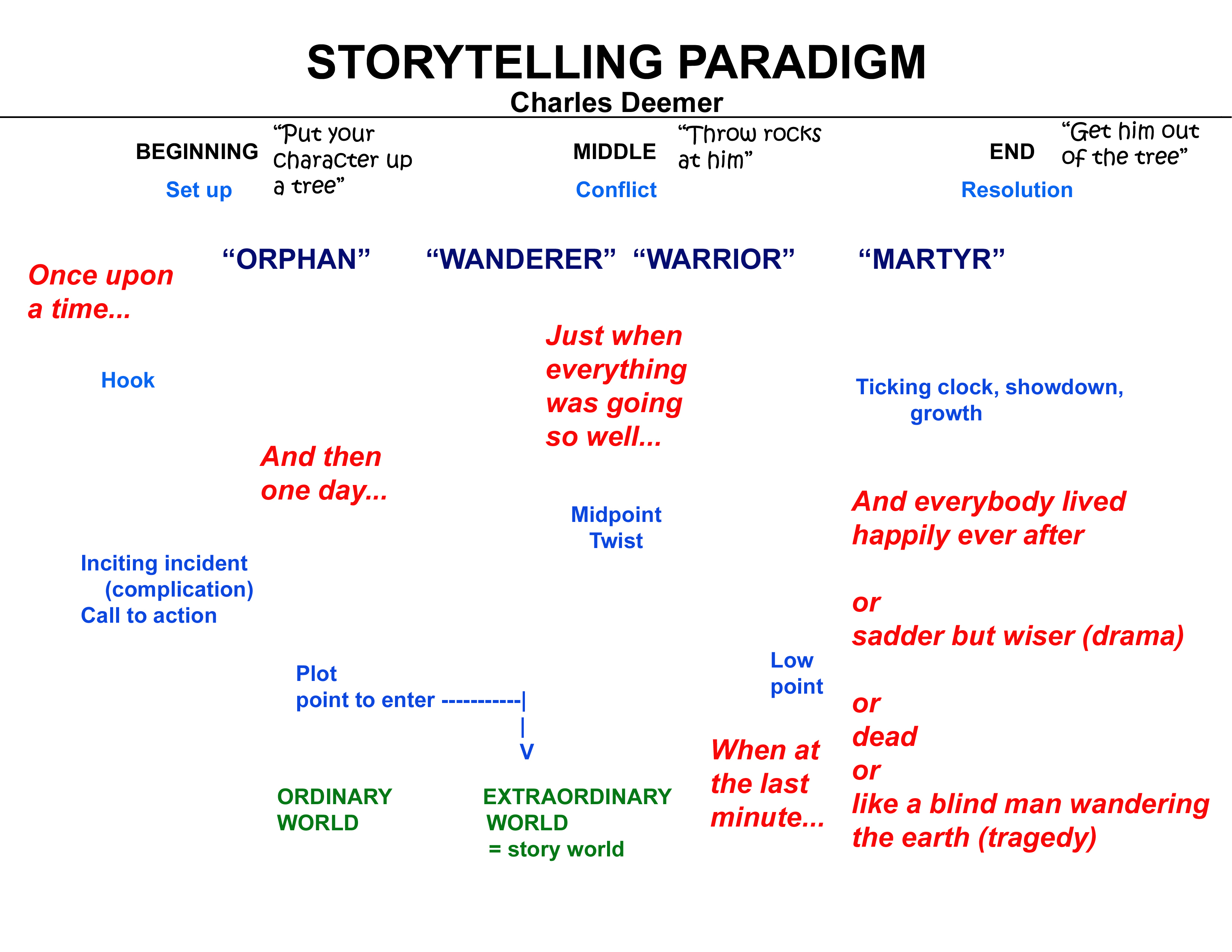
I just finished an incredible book about the development of religion, about which much more later, and have started a recent book about one of my favorite events, the Solvay conference of physicists in 1927, the setting for my play The Sadness of Einstein. We all know Einstein's remark "God does not play dice..." but few know he lost the debate to Niels Bohr on this at the Solvay Conf in 1927.

Here is the opening of the play, written in 1985, my one and only opening with a sex act:

(AT RISE: ROBERT and LEONORA are in bed, making love, Leonora on top with her
back to the audience and a sheet around her. She frantically rides Robert below her.
HENRY is at the window, looking across the street with a pair of binoculars. Leonora's
sexual frenzy will increase to the orgasm indicated below.)

   HENRY:   The paper this morning called it The Copenhagen Interpretation. Niels
     Bohr debated Einstein and won. Poor Einstein, nobody believes him any more. The
     city fathers welcome him as a hero, the greatest genius of his time, they celebrate
     Einstein Day, but his peers prefer to listen to an unknown from Denmark. The
     Copenhagen Interpretation.

(Henry turns to the bed.)

   HENRY:   For God's sake, woman, aren't you finished yet?

   ROBERT:   I think she's close

   HENRY:   It's time you got dressed.

   ROBERT:   (to Leonora) Are you close?

(Leonora responds with a passionate cry and increases the tempo of her "riding.")

   HENRY:   (looking out the window) One day the world will be talking about The
     Oregon Interpretation. We should be across the street right now, telling them about
     it. The Copenhagen Interpretation is wrong, it has to be. Know what Bohr thinks?
     That it doesn't matter what quantum mechanics is about. All that matters is that it
     works. No wonder poor Einstein is in a tizzy. The paper quotes him as saying, "God
     does not play dice with the universe." Bohr disagrees. Well, God may play dice, all
     right, but the content of quantum mechanics still isn't something to dismiss. Bohr's
     close to the truth but he looks reality square in the eye and is afraid to face the social
     consequences of his won insights.

(He turns to the bed again.)

   HENRY:   We don't have all day, Robert.

   ROBERT:   Are you close?

(As before, Leonora replies with a passionate yelp.)

   HENRY:   Too much booze last night. I don't know why you're always picking them
     up. You'd think I bore you.

   ROBERT:   You don't bore me, Henry.

   HENRY:   Then what do you need a woman for?

   ROBERT:   I find them fascinating.

   HENRY:   Does that mean you have to fuck them?

   ROBERT:   Their sexuality if what fascinates me. Look at her. She's in another
     dimension.

   HENRY:   She's probably still drunk. You shouldn't have ordered that last bottle of
     champagne.

   ROBERT:   She likes me. She said she wants to have my baby.

   HENRY:   Oh barf!

   ROBERT:   Actually it's Einstein's baby she really wants. That's why she came to
     Brussels, to get pregnant by Einstein.

I originally intended this play to be the first of four about the same characters, The Quantum Quartet, but the ambitious project got hijacked by my sudden interest in hyperdrama, which seemed to me to fulfill the quantum principles more than traditional drama. I still think highly of this play, even though it has never been produced. However, a production was scheduled in Seattle but the company went broke before we got to its opening, not the first time this has happened in my career.  I love the balls and recklessness of this play! Just as I love the balls and recklessness in some of my short stories from the late 60s and early 70s. Much of my best work has been formally and thematically daring. (But these things are relative: many would consider this same work "traditional." I always demand a story, for example. A STORY. Many avant-garde writers would criticize me for this very point.)

The Sadness of Einstein and other plays at Amazon.

Wednesday, December 15, 2010

Saudi Arabia: A Saudi Trailblazer Making Her Vision Come True « American Bedu

Saudi Arabia: A Saudi Trailblazer Making Her Vision Come True « American Bedu

Wonderful article about my former graduate student.

Recent reading

The Book of Daniel. E. L. Doctorow. Go to Amazon.

An extraordinary novel, which I prefer even to Doctorow's Ragtime. Both have significant political levels of meaning. Here the concept is brilliant: what happens to the children of American Communists who are executed on trumped up charges? We have Daniel and his younger sister.

They visit their parents in prison:
I tried to think of things to tell her, things to make her feel good. I said I liked school. I said I enjoyed math. I said I had lots of friends. These were the lies of my letters, and to my disappointment she seemed to believe all of them. It is the same way you lie to very sick or old people to make them feel good, and let them believe that their pain has at least brought some order to the world. But it is a measure of the unreclaimable distance from you that they believe what you say.
Older, they attend protest rallies in the 1960s:
 The next day, Saturday, is the big event. We sit for hours in the grass at the Lincoln Memorial and listen to the speeches. All around us people with signs on placards, on poles. Young Christian men and women, veterans, radicals with long hair. Self-conscious professors, older women in walking shoes and red noses of pert participation. Guitarists. Freaks with painted faces and gendarme capes waving broom handles crowned with boxes decorated with pictures of flowers and Joan and Bobby and Allen. Scuba divers with white bones painted on their black wetsuits. Priests. Members of organizations with hand-painted banners. It is a beautiful day. All the happy freaks of cold war have poured out of their chartered buses, climbed out of their sleeping bags, each life famous, and come to march on the Pentagon.
 They go to Disneyland:
shorthand culture for the masses, a mindless thrill, like an electric shock, that insists at the same time on the recipient’s rich psychic relation to his country’s history and language and literature. In a forthcoming time of highly governed masses in an overpopulated world, this technique may be extremely useful both as a substitute for education and, eventually, as a substitute for experience. One cannot tour Disneyland today without noticing its real achievement, which is the handling of crowds. Coupled open vans, pulled by tractors, collect customers at various points of the parking areas and pour them out at the entrance to the park. The park seems built to absorb infinite numbers of customers in its finite space by virtue of the simultaneous appeal of numbers of attractions at the same time, including not only the fixed rides and exhibits and restaurants and shops but special parades and flag raising and lowering ceremonies, band concerts, and the like.
 They witness the execution of their parents:
There were a number of people in the room with him. The warden, the executioner, three guards, the rabbi, two doctors and three reporters chosen by lot to represent the press corps. One reporter was from the Herald Tribune, one was with Associated Press, and one was from the News. My father’s hands were shaking and his breathing was rapid and shallow. He had been advised that a phone with a direct line to Washington would be in the execution chamber. He did not look for it when he entered the room. He made no sign that acknowledged the presence of any of the onlookers. He had to be helped into the chair, gently lowered, like an invalid. When he was seated his breathing became more rapid. He closed his eyes and clenched his hands in his lap.
 Finally Daniel loses his troubled sister:
My sister is dead. She died of a failure of analysis. Last autumn’s leaves scuttle across the plots. The plots are separated by pipe fences or planted borders. We drive down the straight narrow streets of the cemetery. It seems to me ridiculous that a cemetery should have street names and that one place rather than another is designated for a person’s burial. It is a city for the dead, in their eyes, a holy place of rest for the dead, in urban grids, with stones and markers like buildings, and upper-class neighborhoods of fashionable crypts, and cooperative apartments in the name of this lodge or that. Some stones are so old they are brown, and very close together, as in ghettos. Fashions change, even in gravestones. The newer style is to have the family name unadorned on one large stone, and individual members’ identity declared on footstones. Poems and biblical quotations seem to be out.
The novel, speaking more directly to the McCarthy era and the sixties, nonetheless has a disturbing contemporary ring to it. It's political fiction of the first order.